Road Safety March 04, 2026
What AI Sees at Road Scale - Supporting Expert Decisions, Not Replacing Them
AI's role in road infrastructure is frequently misunderstood. The question is rarely whether it will replace professional judgment. In practice, it almost never does. The more relevant question is how AI and human expertise can operate together, at a scale that neither can manage alone.
Expertise Remains the Foundation
Field staff and engineers bring something no system can replicate: contextual understanding. They read local conditions, navigate operational constraints, weigh safety implications, and apply experience accumulated over years of direct observation.
That foundation does not change as networks grow. What changes is the difficulty of aligning individual expertise across an entire road system - consistently, transparently, and in real time.
The challenge is not the quality of professional judgment. It is the friction that emerges when many professionals must apply that judgment to shared priorities, cross-team decisions, and executive accountability simultaneously.
A Shared Reference Point
Two experienced engineers can assess the same pavement section and reach slightly different conclusions. Both may be correct within their own frames of reference. The difference in their assessments reflects experience, risk tolerance, and local knowledge - all legitimate.
The problem arises downstream. When those assessments must feed into network-level budget allocations or maintenance prioritization, decision-makers need more than two valid perspectives. They need a common baseline.
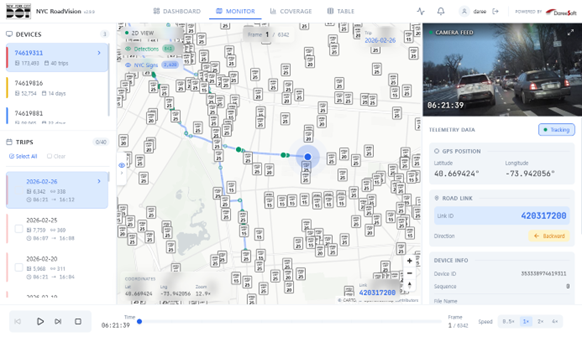
AI provides that baseline. By evaluating road conditions continuously - detecting surface distress, tracking deterioration trends, applying consistent classification criteria across thousands of road segments - it gives professionals a shared starting point rather than a competing one.
This shifts the professional conversation from "I think this section is concerning" to "this section has deteriorated measurably over the past two inspection cycles, consistent with patterns observed in similar segments across the network." The judgment remains human. The evidence becomes shared.
Supporting Consistency Without Removing Discretion
One of AI's most practical contributions is reducing unnecessary friction between teams - not by overriding differences in interpretation, but by making those differences discussable.
When assessments begin from the same data baseline, disagreements become productive. Priorities become easier to justify. Decisions become easier to communicate to non-technical stakeholders, including finance teams, city officials, and the public.
Professional discretion is not eliminated. It is exercised within a common operational language, which makes it more defensible - not less.
From Individual Insight to Collective Understanding
Human expertise excels at interpretation. AI excels at persistence- monitoring continuously, applying the same logic at the thousandth road segment as at the first, and surfacing patterns that would be invisible to any single observer.
Together, they enable something neither achieves alone: a collective, network-wide understanding of how conditions are evolving, where risk is concentrating, and where expert attention is most needed.
AI as an Enabling Layer
At scale, the challenge is not finding better experts. It is supporting many experts as they make complex decisions under real constraints of time, budget, and resource availability.
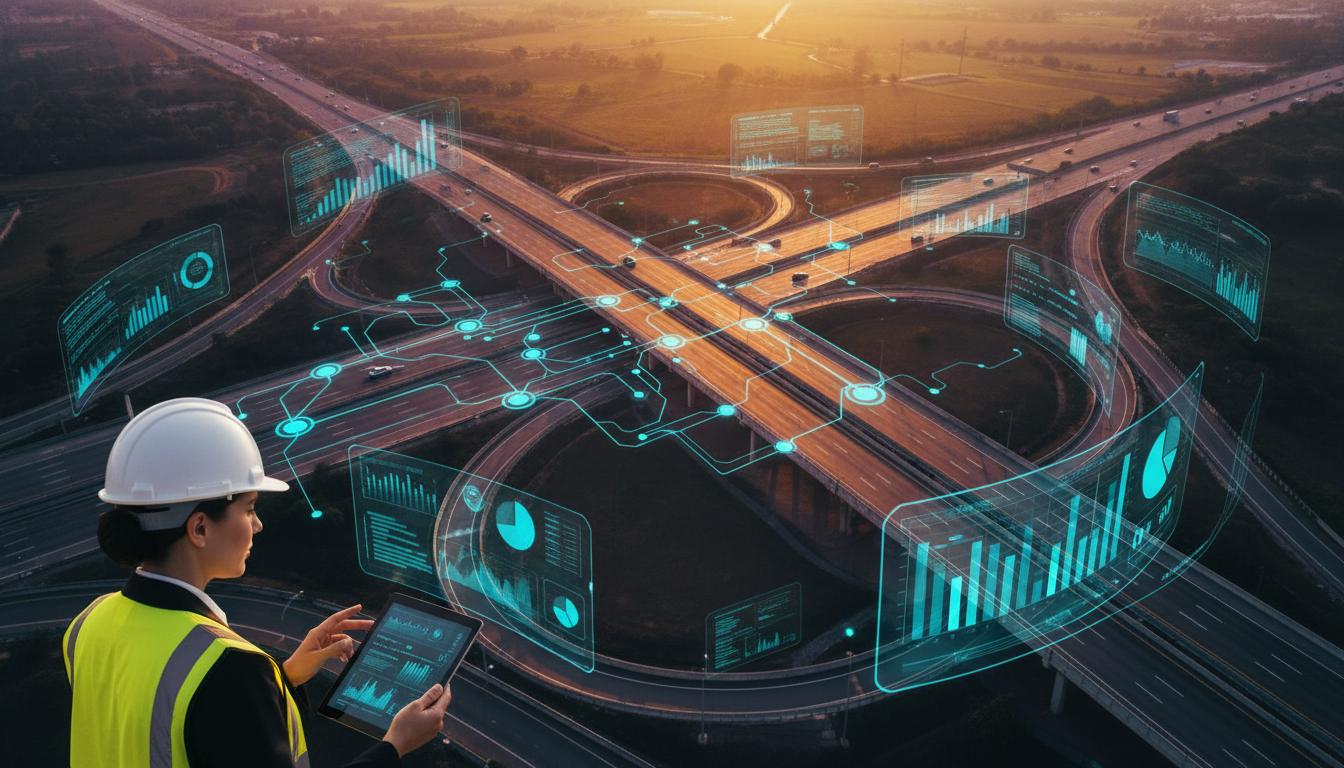
AI functions as an enabling layer - extending visibility, standardizing how information is presented, and strengthening the evidentiary foundation on which professionals rely. It does not remove responsibility from those professionals. It helps them carry it with greater confidence and consistency.
Seeing Roads More Clearly - Together
The most meaningful contribution of AI is not automation. It is clarity.
Clarity that allows expert insight to travel across teams and geographies. Clarity that transforms individual experience into shared, defensible understanding. Clarity that supports the decisions that road professionals must make every day - without substituting for the people who make them.
At road scale, AI does not see instead of humans. It helps experts see together - with consistency, confidence, and context that scales.
Author Andy Jung is Regional Director of Dareesoft North America.